From Digital to Reality: Creating Unforgettable Travel Experiences
The advent of digital technologies opens up innovative horizons in the field of tourism, particularly with the concept of online and remote travel guides. This new approach allows travel enthusiasts to guide tourists around the world while comfortably staying at home.
This article is your roadmap to transforming this innovative business idea into a successful business. From understanding the market to establishing your online presence and effective communication strategies with your remote clients, we will cover all the necessary aspects to succeed as a virtual travel guide.
Get ready to discover how to combine your passion for travel with the power of digital to create a unique and memorable travel experience.
Create Your E-commerce Today
A complete tool to create and manage your e-commerce easily.
Connecting with Your Audience: Targeting Strategies for Online Guides
In the online tourism business, identifying your target market is essential.
Your first step as a remote travel guide is to know who your potential clients are. Are they independent travelers, families, or perhaps history or culture enthusiasts?
Once you have identified your niche, the question is: how to reach your clients effectively? Social media, travel blogs, and partnerships with local travel agencies can be powerful channels. Also, consider local SEO to appear in searches of those planning their trips.
Offering free previews or live Q&A sessions can stimulate interest and build a community around your service.
By understanding and actively responding to your clients' needs, you can turn your concept into a thriving business.
Remote Guide : Innovation in the Tourist Experience
The success of a remote travel guide relies on their ability to activate and engage clients on the ground, even when physically absent.
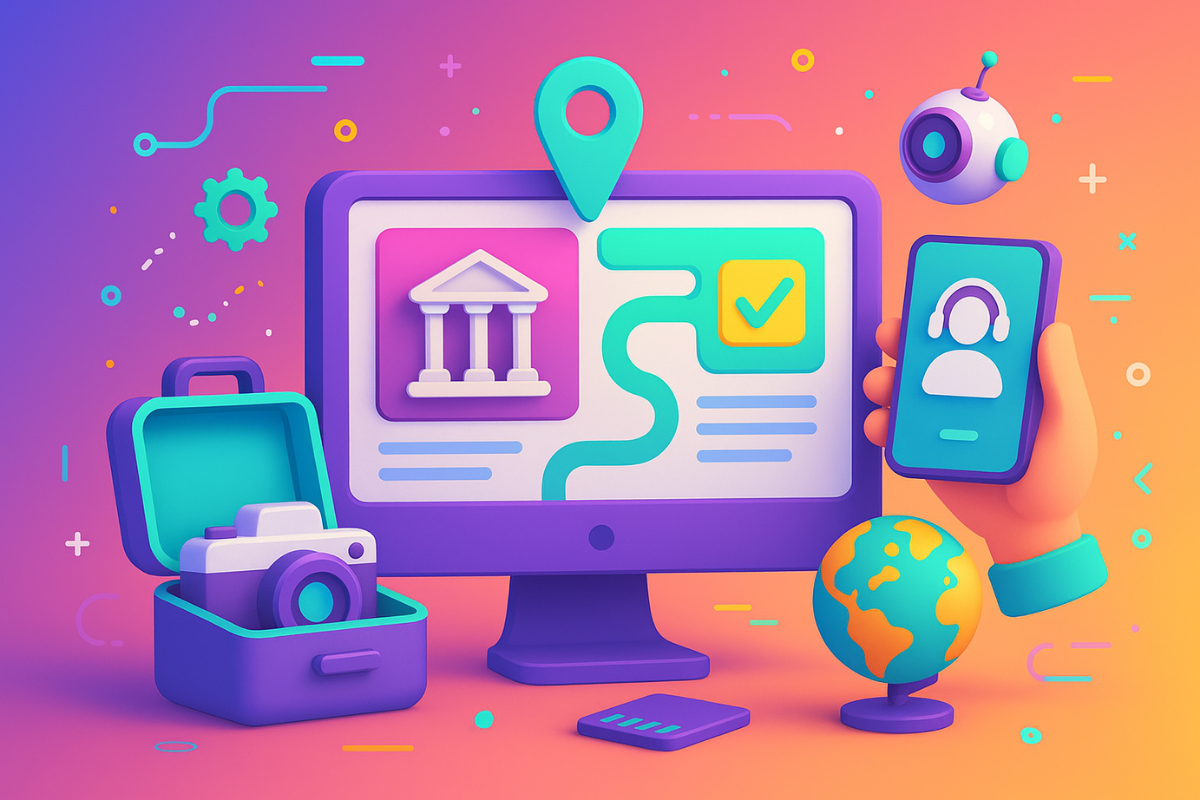
An effective strategy is to use mobile applications or portable communication devices, allowing tourists to receive information and directions in real-time.
You can create interactive tours where tourists follow predefined routes, enhanced by your live or pre-recorded audio or video comments. Offer live chat sessions to answer questions during the tour. Also, integrate games or quests to make the experience more engaging.
By providing these interactive and personalized services, you create an immersive experience for tourists, increasing the perceived value of your remote travel guide service.
Feedback and Continuous Improvement: Key to Retention in Remote Tourism
Once your clients are engaged, the next crucial step is to retain them. For a remote travel guide, retention hinges on the quality of the experience offered.
- After the tour, encourage feedback and suggestions to continually improve your services.
- Offer loyalty programs or discounts for future tours.
- Stay in touch after their visit through personalized newsletters, sharing interesting anecdotes or information about new destinations.
- Organizing webinars or online sessions on travel topics can also maintain interest.
Remember, a memorable experience and attentive follow-up are your best allies for customer retention and encouraging them to return to you for their future travel adventures.
Pricing Strategies for Remote Travel Guides
Revenue generation is a crucial aspect for any remote travel guide.
Consider various pricing models: packages based on the duration of the tour, group rates for families or groups, or even subscriptions for regular tours.
Think about special offers for particular occasions, such as themed tours for festivals, cultural events or honeymoons.
Additionally, consider collaborating with local businesses to offer complementary experiences, such as local food tastings or traditional culture sessions, for an additional fee.
Ensure that you have a reliable, secure and easy payment system with online payment options.
Finally, make sure to clearly communicate the added value of your service to justify your prices.
Creating a Community of Passionate Travelers
Transforming your clients into brand ambassadors is an effective strategy to grow your remote travel guide business.
Encourage your customers to share their experiences online, for example, on social media or travel platforms, by offering incentives like discounts on future tours.
Set up a referral program where current clients can gain benefits by recommending your services to new clients.
Collect and use testimonials from satisfied clients in your marketing materials.
Organize online events, such as sessions to share travel experience, to create a community around your brand.
By actively involving your clients in promoting your service, you create a network of personal recommendations, one of the most effective ways to attract new clients.
Remote Tourism: Winning Strategies for Every Situation
In the remote travel guide business, several challenges arise, but each problem has its specific solution.
Technological Adoption
Opt for user-friendly platforms and test them with a group of clients before launch. Offer simple user guides and responsive customer support to help users less comfortable with technology.
Engaging Interaction at a Distance
Integrate interactive elements such as quizzes or virtual treasure hunts into your tours. Use augmented reality tools to make experiences more immersive.
Managing Time Zones
Offer diverse tour schedules and use online booking systems that allow clients to choose slots suitable for their time zone.
Personalizing Experiences
Create themed tours (history, gastronomy, nature) and offer the possibility to customize itineraries. Use pre-visit questionnaires to better understand clients' interests.
Connection Reliability
Work with reliable technology service providers and always have a backup plan in case of technical failure, such as pre-recorded audio guides available for download.
Use Cases with Detailed Solutions
Remote travel guiding offers a variety of situations where it can be creatively and effectively applied. Here are some concrete examples:
Cultural Tours for Schools
- Solution: Use video conferencing platforms like Zoom for interactive tours. Create age-appropriate educational content and integrate interactive quizzes to make the experience more engaging.
- Tools: Video conferencing platforms, multimedia educational content, interactive quiz tools.
Exploring Inaccessible Destinations
- Solution: Develop 360° virtual tours with narration by the guide. Use virtual reality for deeper immersion and pre-recorded videos to present site details.
- Tools: 360° cameras, virtual reality software, video editing systems.
Personalized Tours for Specific Groups
- Solution: Prepare themed tours based on thorough research. Offer interactive sessions during the tour to answer specific questions. Customize itineraries according to the group's interests.
- Tools: Specialized research guides, itinerary planning system, instant messaging for live interactions.
Assistance for Independent Travelers
- Solution: Offer guiding services via mobile apps with geolocation to provide contextual information. Set up live chats for instant assistance.
- Tools: Mobile guiding apps, geolocation features, live chat systems.
Virtual Events and Festivals
- Solution: Collaborate with event organizers to live stream the festivities. Provide real-time commentary and cultural anecdotes to enrich the experience.
- Tools: Live streaming platforms, audiovisual equipment for broadcasting, editing software to add commentary.
Each use case illustrates how specific solutions and appropriate tools can be employed to overcome the challenges of remote travel guiding, offering a unique and personalized experience tailored to various needs.
Launch Your E-commerce In 5 Minutes
All-in-one e-commerce tool: quick and easy to set up.
Conclusion
Throughout this article, we have covered the essential steps to launch and grow a remote travel guide business. From identifying your target audience to creating memorable client experiences, each aspect of this business model requires meticulous attention and a personalized approach. Challenges, such as technological barriers or client engagement, are not obstacles but catalysts for innovation and service improvement.
Strategic use of digital tools, combined with a deep understanding of your clients' needs and preferences, positions you for success in this evolving sector. The future of tourism integrates a significant digital dimension, and as a remote guide, you have the unique opportunity to shape this new reality.
See how PayFacile can help
Increase Your Sales Potential
Automate and grow your e-commerce business with ease.