Responsible Innovation: Cardboard as Tomorrow's Material
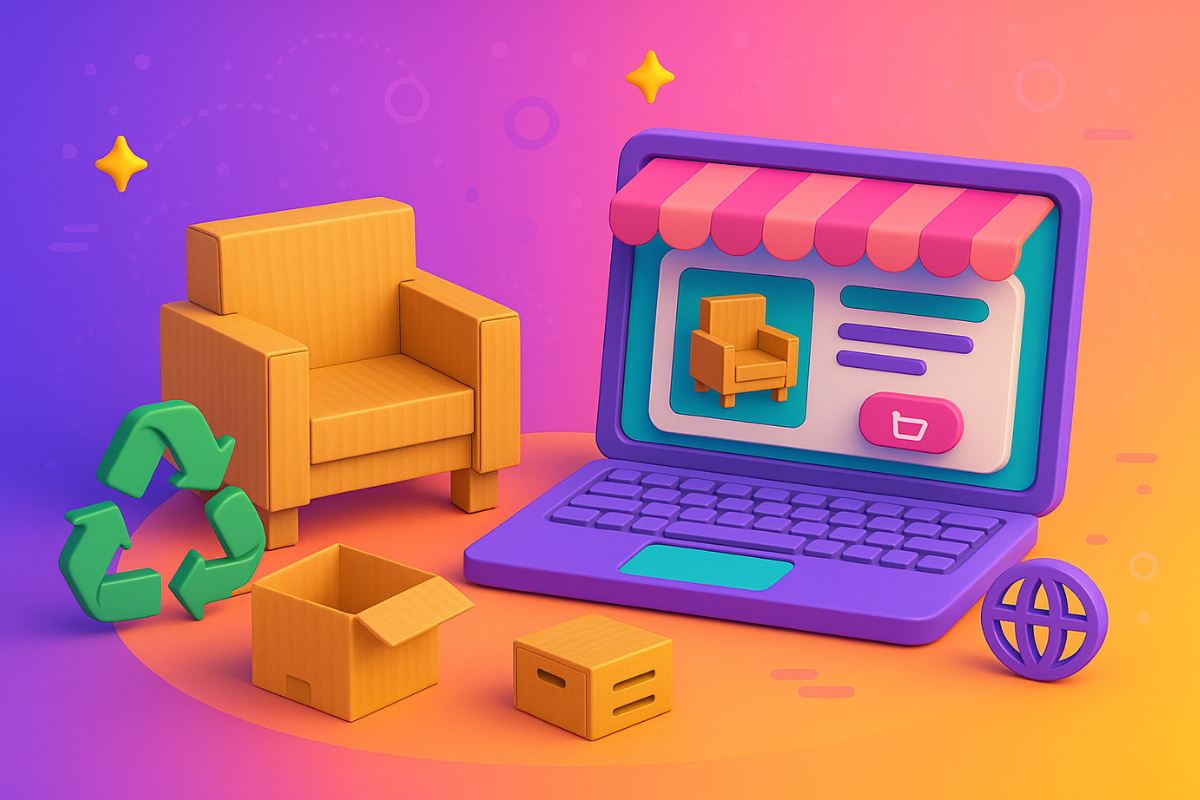
The fusion of ecological innovation and the furniture sector takes shape in cardboard furniture kits, a bold response to current environmental challenges. These pieces embody a thoughtful consumption approach, emphasizing sustainability without compromising on aesthetics or functionality. They represent a booming business opportunity, aligning with consumers' growing commitment to greener practices.
This guide aims to succinctly present how an eco-design-based business model can thrive in harmony with our environment. We explore the strategic trajectory necessary to establish a flourishing cardboard furniture business, firmly grounding our actions in practical ecology and responsible innovation.
Create Your E-commerce Today
A complete tool to create and manage your e-commerce easily.
Building an Eco-Conscious Audience: Engaging Tactics
The rise of cardboard furniture signals a shift in mindset towards more conscious consumption. At the core of this change, eco-responsibility and innovation attract an audience seeking sustainable and unique interior options. The appeal of these pieces lies in their ability to combine functionality with environmental respect.
To captivate this market, it is crucial to articulate a marketing strategy focused on communicating the tangible environmental benefits and versatility of the product. Companies must deliver their message through carefully chosen channels where eco-sensitive consumers are most present.
Using concrete sustainability proofs, such as certifications or satisfied customer testimonials, can enhance credibility and encourage adoption. This market segment, although still modest, is poised for accelerated growth through a targeted and authentic approach.
Reinventing Furniture Shopping: The Central Role of User Experience
Implementing the Business Model Canvas for a cardboard furniture kit relies on a clear understanding of key consumer touchpoints.
In this context, sales channels are carefully selected for their effectiveness in converting interest into action. The online store becomes a crucial activation lever, featuring an intuitive user journey and detailed product information. Simultaneously, physical store, such as pop-up stores or coworking spaces, can serve as interactive showcases for the products.
The key is to simplify the purchasing experience while educating the consumer about the eco-friendly added value. It involves creating a frictionless access path that leads the customer from discovery to product ownership, thereby strengthening their commitment to the brand and its values.
The Cement of Loyalty: Rewards and Ecological Engagement
To maintain customer interest and loyalty towards our cardboard furniture range, we deploy a series of innovative retention strategies.
The loyalty program revolves around tangible rewards, such as discounts on future purchases and invitations to exclusive events, to encourage repeat purchases.
Additionally, value-added offers, such as furniture customization tutorials and tips for extending their lifespan, foster a sense of belonging to an environmentally conscious community.
These approaches, supported by responsive and attentive customer service, ensure a positive customer experience, reinforce trust, and foster long-term loyalty.
Flexible Pricing: A Sustainable Investment in the Future
Developing a revenue strategy for our cardboard furniture line involves a delicate balance between accessibility and profitability.
The monetization model relies on a flexible pricing structure, where the choice between economical base options and premium customizations caters to diverse client needs and budgets.
Implementing targeted promotions and strategic discounts stimulates initial sales, while introducing partnerships with local creators for limited editions increases perceived value and purchase desire.
The timely integration of these tactics, supported by clear communication on product quality and durability, is essential for maximizing revenue without compromising our commitment to eco-responsibility..
From Consumer to Collaborator: Cultivating Brand Ambassadors
To transform our customers into enthusiastic ambassadors for our cardboard furniture range, we emphasize creating an unforgettable customer experience.
- We encourage the sharing of experiences by highlighting creative assemblies on our digital platforms, rewarding contributions with exclusive benefits.
- Customization workshops can also strengthen the bond between the brand and the consumer, fostering an active and engaged community.
- Moreover, integrating authentic customer feedback into our communication materials values transparency and inspires trust.
These initiatives, combined with targeted marketing actions, help build positive word-of-mouth and customer retention that echoes our values of eco-responsibility and innovation.
Reinvented Logistics for a Circular Economy
Diving into the cardboard furniture entrepreneurial world is not without challenges.
Among them, perceived durability and product robustness are common concerns. To counter these misconceptions, we have developed innovative materials and offer live demonstrations of the furniture’s strength and functionality.
Logistics can also pose a hurdle, given the size and shape of the kits. Solutions like flat and modular packaging, as well as partnerships with eco-friendly carriers, are part of our approach. We also emphasize our proactive customer service, ready to resolve any issues quickly, thereby reinforcing consumer trust.
By anticipating these challenges and implementing creative solutions, we position ourselves as a brand that doesn’t just sell a product but offers a complete and satisfying experience.
Eco-Innovation: Case Studies of Cardboard Leaders
Observing the journeys of companies that have successfully established themselves in the cardboard furniture market can be instructive.
Take the example of Cartonist, a startup that capitalized on the DIY and upcycling trend. Through a series of online tutorials and interactive workshops, Cartonist has won over a dedicated community of eco-consumers.
Another success story is EcoFold, which revolutionized the sector by patenting a unique folding system that ensures easy assembly and increased durability.
These companies demonstrate that with constant innovation and a deep understanding of customer needs, it is possible to turn skeptics into loyal followers. Their success is based on active market listening and agile adaptation to user feedback, a model to follow for aspiring entrepreneurs.
Launch Your E-commerce In 5 Minutes
All-in-one e-commerce tool: quick and easy to set up.
Conclusion
The rise of cardboard furniture in the sustainable consumption landscape is more than a fleeting trend; it reflects a collective awareness towards a greener future. Entrepreneurs entering this sector are not just building an ecological business; they are contributing to the construction of a responsible future.
For those ready to take on this challenge, the key lies in continuous innovation, customer listening, and an agile strategy that can adapt to changing demands. By emphasizing quality, durability, and functionality, cardboard furniture kits can become an obvious choice for conscious consumers.
It is a timely moment to shape the furniture industry with conscience and creativity, offering not just products, but a lasting legacy.
See how PayFacile can help
Increase Your Sales Potential
Automate and grow your e-commerce business with ease.